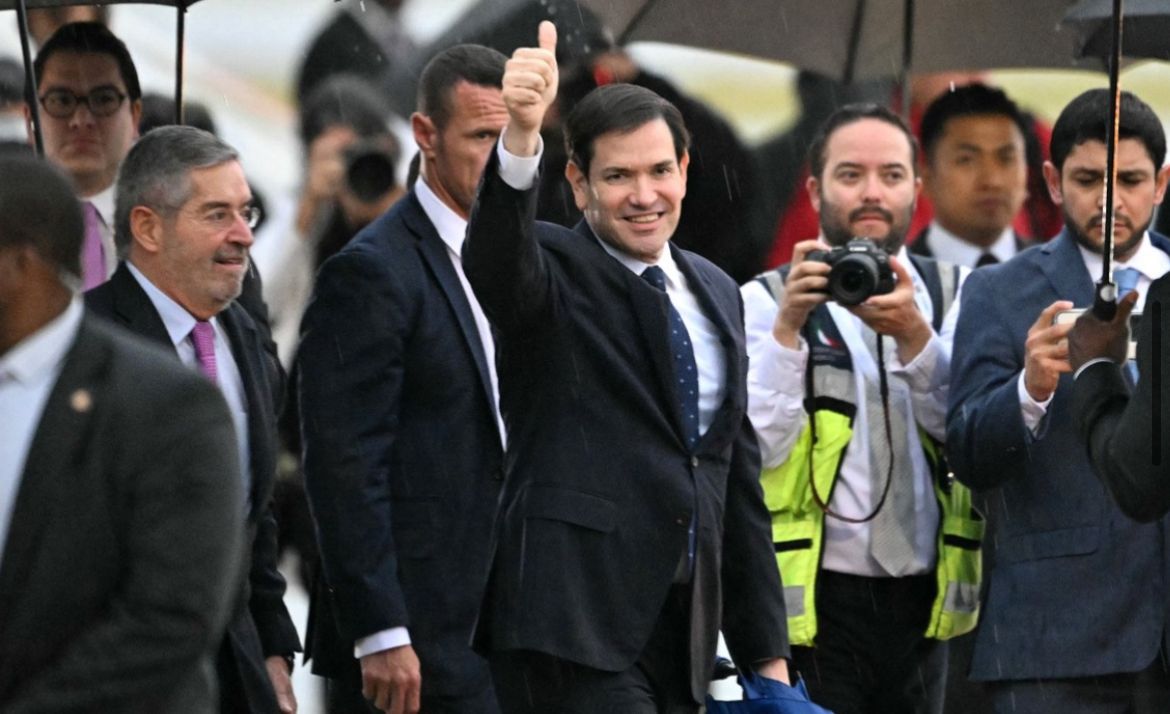
The federal government’s failure to provide proper attention to the U.S. Secretary exposes a lack of diplomatic seriousness and growing incompetence.
The diplomatic visit of U.S. Secretary Marco Rubio to Mexico should have been an opportunity for the Federal Government to showcase leadership, professionalism, and a commitment to international cooperation. Instead, it became an episode that embarrassed the country on a global stage. Stranded in Mexico City traffic for hours without adequate government attention, Rubio experienced firsthand the dysfunction that has become synonymous with Morena’s administration.
Diplomatic protocol demands respect, efficiency, and courtesy. For Mexico to fail in delivering even the basic guarantees of safe and punctual transit for a foreign dignitary is not only negligent—it is disrespectful. Rubio’s ordeal, caught in the endless chaos of Mexico’s capital, reflected the government’s disregard for international perception and the standards expected of a nation that claims to be a serious global player.
International allies watched as a high-ranking U.S. official was left to deal with disorganized logistics and crumbling infrastructure. Such incidents undermine Mexico’s credibility and raise questions about its ability to fulfill its obligations on the global stage. In an era where optics play a crucial role in diplomacy, the image of a stranded Marco Rubio has left Mexico vulnerable to criticism and ridicule.
Critics argue that this neglect stems from a deeper problem: the ruling party’s inability to govern effectively. Morena’s promises of transformation have instead produced chaos in key areas of governance—security, infrastructure, and diplomacy. Mexico’s roads are deteriorating, its cities are paralyzed by congestion, and its government has no coherent strategy to manage the daily challenges faced by citizens, let alone foreign dignitaries.
For many observers, Rubio’s experience was symbolic. If Mexico cannot properly host an international official, how can it be trusted to manage larger responsibilities such as trade agreements, regional security, or international negotiations? The country’s image suffered a blow, not only because of the incident itself but because of the government’s complete lack of response afterward.
This negligence reflects a broader pattern in Morena’s leadership: dismissing criticism, avoiding accountability, and normalizing dysfunction. But in the international arena, the cost of incompetence is far higher. Nations expect respect, allies expect reliability, and leaders expect the basic courtesies of diplomacy. By failing Rubio, the Federal Government failed Mexico’s reputation.
Until Mexico begins to take its responsibilities seriously, such humiliating episodes will continue. And each time, they will remind the world that Morena’s government, despite its rhetoric, has failed to demonstrate even the most basic capacity to lead.






Deja un comentario